The global economy has proved more resilient than expected but that resilience is masking deep structural problems that threaten long term development according to the United Nations World Economic Situation and Prospects 2026 report released last week.
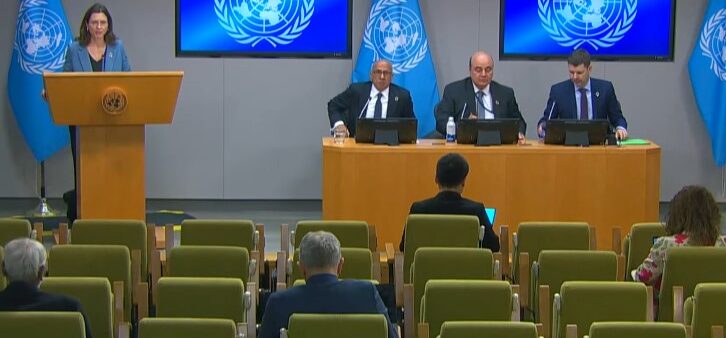
Speaking at the launch of the report Navid Hanif Assistant Secretary General for Economic Development at UN DESA said global growth is projected to stabilise at 3.7 percent in 2026 up from 2.8 percent last year. Growth has remained steady despite sharp tariff hikes that disrupted global trade in 2025.
The system proved more resilient than anticipated Hanif said. But resilience should not be mistaken for strength.
Beneath the headline numbers he warned lie persistent risks and widening imbalances. High debt burdens and shrinking fiscal space are constraining investment across much of the world while elevated policy uncertainty continues to weigh on confidence. Trade growth is expected to slow further under the combined pressure of tariffs and geopolitical tensions.
At the same time the cost of living crisis continues to hit the poorest households hardest. Gender gaps remain wide youth unemployment is stubbornly high and climate shocks are increasingly disrupting supply chains driving up prices and threatening livelihoods.
Hanif also flagged artificial intelligence as a double edged force. While AI holds promise for productivity and growth he warned that without safeguards it could deepen existing inequalities.
The message is clear he said. Resilience alone will not deliver the Sustainable Development Goals which remain off track. Progress is achievable but only through a balanced policy mix and stronger more effective global cooperation.
Inflation easing but inequality widening
Global inflation is projected to decline to 3.1 percent in 2026 offering some relief. But UN economists stressed that lower inflation does not automatically translate into improved living standards.
Shantanu Mukherjee Director of the Economic Analysis and Policy Division at UN DESA said years of subpar global growth have already caused lasting damage.
In the decade before the pandemic global growth averaged 3.2 percent Mukherjee said. Since then it has remained stubbornly below that level resulting in growing divergences across countries.
One stark indicator is the growth of GDP per person. In developed countries where income levels were already high per capita GDP growth has increased rising from 1.2 percent in the 2000s to 1.7 percent in the post pandemic period.
Developing countries tell a different story. While per capita incomes are still growing the pace has slowed sharply from 4.3 percent in the 2000s to around 3.3 percent in recent years. For the least developed countries the slowdown is even more severe with per capita growth averaging just 1.2 percent over the past three years compared to 4 percent in the 2000s.
The question we have to ask Mukherjee said is how countries and populations are supposed to catch up when rates of progress are slowing down.
Households under pressure governments constrained
The pressure is visible at every level. Before the pandemic wage and income growth broadly kept pace with rising prices. Since then prices have surged while wages have lagged far behind squeezing living standards especially for low income households.
That squeeze is mirrored at the macroeconomic level. While access to international financial markets has improved for developing countries on paper borrowing costs remain two to three times higher than those faced by developed economies.
In 2025 developing countries spent around 12 percent of public revenues on interest payments. For least developed countries that figure is close to 20 percent sharply limiting resources available for public investment in health education and climate adaptation.
The report also finds that far fewer developing countries have the fiscal space to adopt expansionary policies compared to advanced economies. Hopes that official development assistance could ease these constraints appear dim. If announced aid cuts go ahead global ODA levels would fall back to 2020 levels with the most vulnerable countries facing the steepest proportional declines.
A warning not a victory lap
Despite signs of stability UN officials were clear that the current moment should not be treated as a success story.
This resilience is necessary for progress Mukherjee said but it is not sufficient. A lot of ground has already been lost.
The blueprint for sustainable development the UN insists already exists. What is missing is coordinated action on debt relief climate finance trade and technology governance to prevent todays fragile resilience from turning into tomorrows crisis.