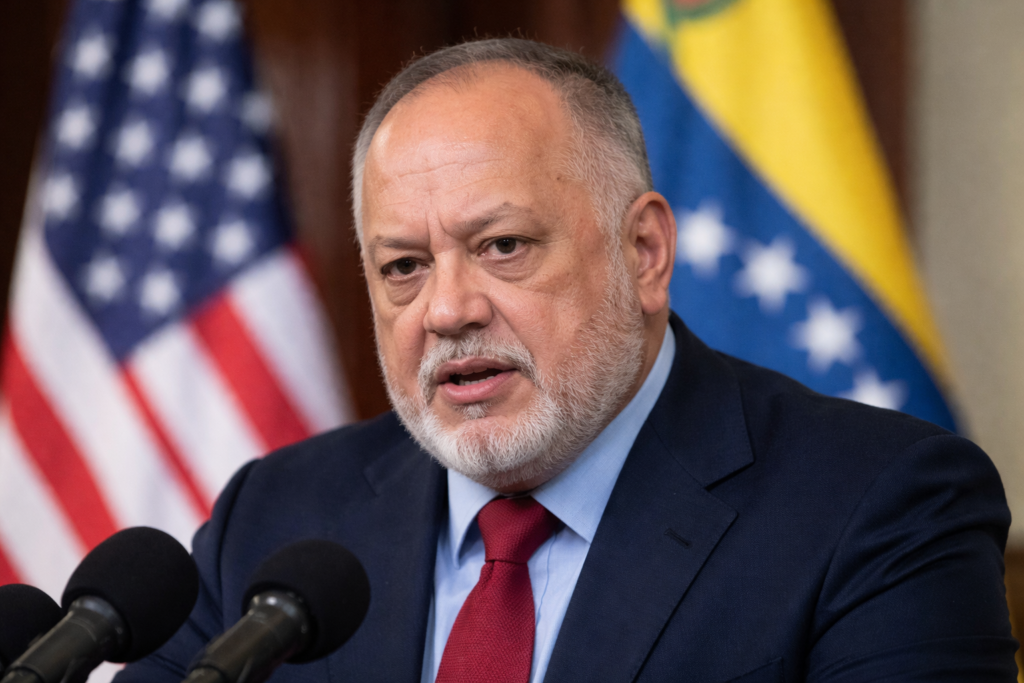
Officials from the Trump administration had been in contact with Venezuela’s powerful interior minister, Diosdado Cabello, for months prior to the U.S. operation that captured President Nicolas Maduro, sources familiar with the matter told Reuters. Communication with Cabello, 62, has continued in the weeks since the raid.
U.S. officials warned Cabello not to use the security forces or ruling-party militias under his control to target opposition figures. This security apparatus, which includes intelligence services, police, and the armed forces, remains largely intact following the January 3 operation, the sources said.
Cabello is named in the same U.S. drug-trafficking indictment that provided the basis for Maduro’s arrest but was not apprehended during the operation. Discussions between U.S. officials and Cabello, which also touched on sanctions imposed on him and the indictment he faces, reportedly began early in Trump’s current administration and intensified in the weeks leading up to the Maduro raid.
“These communications are crucial to U.S. efforts to manage the situation in Venezuela,” a source familiar with the administration’s thinking said. “If Cabello mobilizes the forces under his command, it could spark the kind of chaos the U.S. wants to prevent and potentially destabilize interim President Delcy Rodriguez’s authority.”
It is unclear whether discussions included future governance plans for Venezuela or whether Cabello has followed U.S. warnings. Publicly, Cabello has pledged unity with Rodriguez, whom the Trump administration has praised.
While Rodriguez has been seen as central to U.S. strategy for a post-Maduro Venezuela, Cabello is widely believed to hold significant power to support or disrupt these plans. U.S. officials have communicated with him both directly and through intermediaries, according to a source.
Requests for comment from the White House and the Venezuelan government were not immediately answered.
Cabello: Maduro Loyalist and Power Broker
Long considered Venezuela’s second most influential figure, Cabello rose as a close aide to the late Hugo Chavez and later became a loyal enforcer for Maduro. Though Rodriguez and Cabello have both held central roles in government, legislature, and the ruling socialist party, they are not considered close allies.
A former military officer, Cabello has extensive influence over the country’s intelligence and counterintelligence agencies, which conduct domestic surveillance, and has close ties to pro-government militias known as colectivos. Analysts say Washington has relied on Maduro loyalists like Cabello to maintain order while securing access to the nation’s oil reserves during a transitional period.
U.S. officials remain wary of Cabello, citing his history of repression and rivalry with Rodriguez, which could allow him to disrupt stability. Meanwhile, Rodriguez has been consolidating power by placing loyalists in key positions and responding to U.S. requests to increase oil production, according to sources in Venezuela.
Elliott Abrams, former U.S. special representative for Venezuela, said many Venezuelans would expect Cabello to eventually be removed if a democratic transition is to succeed. “If and when he goes, Venezuelans will know that the regime has really begun to change,” he said.
Sanctions and Indictments
Cabello has been under U.S. sanctions for alleged involvement in drug trafficking. In 2020, the U.S. issued a $10 million bounty for him as a key figure in the so-called “Cartel de los Soles,” a Venezuelan government-linked drug trafficking network. That bounty has since increased to $25 million. Cabello denies any links to drug trafficking.
Following Maduro’s ouster, some U.S. politicians questioned why Cabello was not also detained. “I know that just Diosdado is probably worse than Maduro and worse than Delcy,” Republican Representative Maria Elvira Salazar told CBS’s Face the Nation on January 11.
In subsequent speeches, Cabello condemned U.S. intervention, declaring that “Venezuela will not surrender.” Reports suggest that searches at checkpoints have decreased, and both the Trump administration and Venezuelan authorities have indicated that many detainees considered political prisoners will be released. Cabello, as interior minister, is overseeing this process, though rights groups say releases are slow and hundreds remain unjustly detained.
This article is based on reporting by Erin Banco, Sarah Kinosian, and Matt Spetalnick/Reuters.