According to the Global South Development Achievements and Challenges Report 2025, published by the Global South Research Center—an international research platform involving experts from both Southern and Northern countries, the collective rise of the Global South is no longer peripheral but central to shaping the future world order.
The report argues that at a time when global power equations are undergoing profound change, the Global South is emerging as a decisive force in economic growth and trade. Data from the report suggests that the region is playing a meaningful role in advancing human progress, both economically and socially.
Global South as the Engine of World Growth
At the core of this transformation is scale. The report highlights that the Global South today accounts for approximately 85% of the world’s population, giving it unparalleled demographic weight. Economically, it represents around 40% of the global economy, underscoring how growth is no longer concentrated solely in advanced Western economies.
Trade and investment figures further reinforce this shift. The Global South contributes 46% of global goods exports, 57% of global foreign direct investment inflows, 45% of global manufacturing output, and nearly half of the world’s intermediate goods exports.
Together, these indicators position the Global South as a central pillar of the global economic system rather than a peripheral supplier of raw materials.
Rapid Economic Expansion Since the Early 2000s
Historically speaking, the rate of growth has been remarkable. According to the report, “since the start of the 21st century, the cumulative economic output of the Global South has grown by about 5.4 times, with an average annual growth rate of 5.1%, which is significantly higher than the global average of 3.5%.”
This is a testament to the rapid development of industry in various parts of the world. Industrialization has continued to move ahead. Consequently, trade volumes and investment flows between countries have increased significantly, making it less necessary to rely on the traditional markets of the West.
However, it is not only the rate of growth that is remarkable but also the fact that trade is emerging as a hallmark of the Global South. According to the report, “Global South trade is forecast to expand at a compound annual growth rate (CAGR) of 4.4% over the next five years. By 2033, annual trade volumes are forecast to approach $14 trillion, driven by the growing demand, industrial capacity, and regional market integration.”
Equally important is the fact that South-South trade is on the increase. According to the report, South-South trade is forecast to expand at an annual rate of 3.8%. This trend signals a structural shift away from dependence on Global North markets and towards diversified, intra-regional economic cooperation.
Social Progress: Health and Education Gains
This economic development has been accompanied by notable social progress. The report points out that there has been significant progress in terms of public health, with the average life expectancy in the Global South increasing from 62 years to 70 years.
There has also been significant expansion in access to education. The enrollment in higher education has almost tripled, increasing from 13% to 38%. This is important because it is essential for building human capital.
These improvements are critical, as they underpin long-term productivity and social mobility across developing regions.
From “Third World” to Global South: A Concept Redefined
The emergence of the Global South has also led to a new vocabulary in the global arena. Historically, nations in Africa, Asia, and Latin America were classified as “developing” or belonging to the “Third World,” a term coined by Alfred Sauvy in 1952. However, over the years, this term has come to be seen as synonymous with poverty, instability, and underdevelopment, often perpetuated by Western media coverage.
As a corrective measure, the term “Global South” has come to be used as a more neutral and politically conscious term. Currently, the term has no specific geographical connotation. Rather, it reflects shared political, economic, and geopolitical experiences, including colonialism and a desire for greater autonomy.
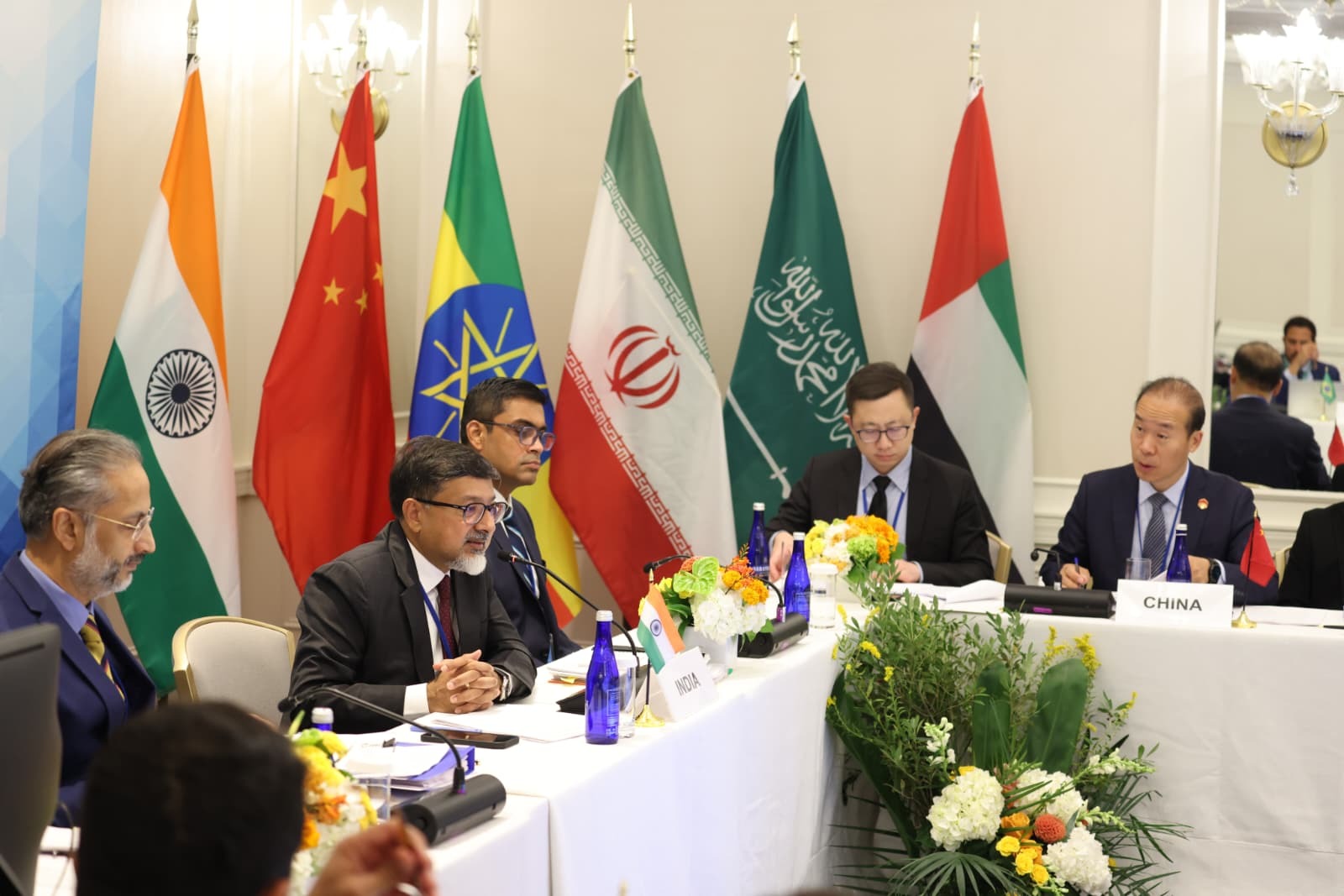
Notably, the Global South is not operating alone. Nations are increasingly being grouped together in multinational formations and trade blocs that give them greater collective clout. The most visible of these formations is BRICS, which originally consisted of Brazil, Russia, India, China, and South Africa. It has since expanded to include Egypt, Ethiopia, Iran, Saudi Arabia, and the United Arab Emirates, with Indonesia joining in 2025.
This expanded BRICS bloc aims to strengthen economic cooperation, enhance geopolitical coordination, and challenge Western-dominated global institutions. Other key groupings include the Association for Southeast Asian Nations (ASEAN), the African Continental Free Trade Area, and South America’s Mercosur, all of which promote regional integration and economic self-reliance.
Rise of New Post-Western World
Global institutions are increasingly acknowledging this shift. The World Bank has recognized a“shift in wealth” from the North Atlantic toward the Asia-Pacific region, challenging long-standing assumptions about where economic power resides.
Projections suggest that by 2030, three of the world’s four largest economies will be Global South countries, led by China and India. India alone is projected to become the third-largest economy by 2029, with a GDP of $6.3 trillion.
The combined GDP of the BRICS nations has already surpassed that of the G7, signaling a historic rebalancing of economic influence.
Another defining feature of the Global South’s rise is that many of its countries are moving away from cost-driven, resource-export models toward value-driven industrial strategies.
Indonesia, for example, has halted exports of raw nickel ore, prioritizing domestic processing and the manufacture of downstream products such as lithium-ion batteries. Similarly, Chile has introduced a national lithium policy focused on adding value within the country rather than exporting raw materials. These strategies aim to capture greater economic returns, generate skilled employment, and strengthen domestic industries.
These changes are fueling broader geopolitical debates. Analysts increasingly refer to the emergence of an “Asian Century,” alongside discussions of a “post-Western world” in which Global South nations exert greater influence over global affairs.
The growing confidence of the Global South was evident at the World Economic Forum’s Annual Meeting of the New Champions 2024. Leaders from emerging economies discussed shared challenges and opportunities linked to what the forum describes as the “Next Frontiers of Growth.”
Malaysia’s Economy Minister Rafizi Ramli underscored the need for collective action within ASEAN, stating: “We are small, we are non-aligned, but we are very open. It is part and parcel of emerging economies getting together to ensure that we are not trapped by everything happening.”
Busi Mabuza, Chairperson of South Africa’s Industrial Development Corporation, welcomed the momentum, saying: “We are delighted that the growth in emerging economies, especially the BRICS economies, has been much faster.” She added that this shift places Global South nations at the global table, enabling access not only to investment but also to knowledge exchange.
Alongside major emerging economies, middle powers are gaining prominence. According to the World Economic Forum, middle powers,countries that sit below great powers but still exert significant influence—are increasingly shaping global politics.
While traditionally associated with Global North nations like Australia, Canada, and South Korea, the definition is evolving. Countries such as India are now seen as moving beyond middle-power status toward major power influence.
At the WEF session titled ‘Middle Powers in a Multipolar World’, Dino Patti Djalal, Founder and Chairman of Indonesia’s Foreign Policy Community, remarked: “I think in the 21st century, the world order will be shaped not by the great powers or major powers but by the proliferation of middle powers.”
Persistent Challenges Behind the Progress
Despite these gains, the Global South continues to face significant obstacles. External pressures such as a sluggish global economy, disrupted multilateral trade systems, escalating climate risks, and rising regional conflicts.
Internally, many countries struggle with infrastructure deficits and insufficient investment in education and healthcare. These challenges threaten to slow progress if not addressed through coordinated policy responses.
Nevertheless, the rise of the Global South is not a temporary trend but a defining feature of the 21st century, one that is challenging the long-standing dominance of the Global North.
I