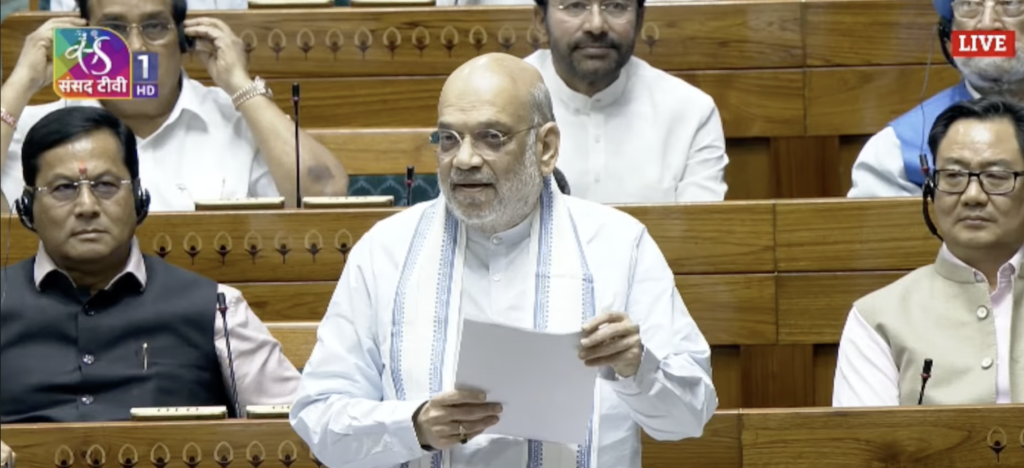
On Friday, April 17, 2026, the floor of the Lok Sabha became a political battlefield. For the first time in years, a major government reform the Constitution (131st Amendment) Bill was defeated. While it secured 298 votes in favor, it fell short of the 352 votes required for a two-thirds majority. Minutes later, the government withdrew the accompanying Delimitation Bill 2026 .This wasn’t just a procedural loss, it was a historic stall on the plan to redraw India’s political map.
What is Delimitation?
In simple terms, delimitation is the process of redrawing the
boundaries of parliamentary and assembly constituencies to
ensure that each MP represents a roughly equal number of
voters. As populations grow and shift, the map needs to be
updated.
Why was the 2026 Bill so controversial?
Since 1976, the number of seats in the Lok Sabha has been
frozen based on the 1971 Census. This was done to ensure that
states that successfully implemented population control (mostly
in the South) weren’t “punished” by losing seats to states with
higher birth rates (mostly in the North).That freeze was legally set to expire in 2026. The government’s
new bill proposed:Expanding the Lok Sabha: Increasing total seats from 543 to 850. The 2011 Factor: Using 2011 Census data to redraw boundaries immediately, rather than waiting for the upcoming 2027 Census.
The Great “North-South” Divide
The bill sparked a fierce debate over federalism. Southern states—including Tamil Nadu, Kerala, and Telangana—argued that the expansion would create a massive power imbalance.
The Pro-Bill Argument: The government argued that “one person, one vote” is the foundation of democracy. They
claimed the 850-seat model would actually increase the number of southern MPs (e.g., Tamil Nadu rising from 39 to 59 seats).
The Anti-Bill Argument: The Opposition, led by Rahul
Gandhi, labeled the bill “anti-national.” They argued that while the South’s numbers might go up, their percentage of
power would shrink significantly compared to states like Uttar Pradesh and Bihar, effectively silencing the voices of states that have excelled in healthcare and education.
The “Hostage “strategy : Women’s Reservation
The government claimed they could only implement the 33% quota for women after the seats were increased through
delimitation. Critics called this a “political shield,” accusing the government of holding women’s representation hostage to force through a
redistribution of power that favored the North.
Why It Failed: The Numbers Game
To pass a Constitutional Amendment, the government needs:
- A majority of the total membership of the House.
- A two-thirds majority of those present and voting.
Yesterday, with 528 members present, the government needed
352 votes. They received 298. The “United Opposition” (the
INDIA bloc) held their ground, refusing to support the bill
without a written guarantee protecting regional seat ratios and a
commitment to wait for the 2027 Census.
The Aftermath: What Happens Now?
The withdrawal of the bill creates a massive political vacuum as
we head toward 2027: The 2029 Elections: Unless a new consensus is reached,
the 2029 General Elections will now likely be fought on the old 1971 map.
The Women’s Reservation Delay: Because the 131 st Amendment failed, the implementation of the 33%
women’s quota is effectively pushed into the next decade.
The Street Battle: Home Minister Amit Shah has warned
that the Opposition will face the “wrath of women voters,”
while the BJP has already announced nationwide protests
against the “anti-women” stance of the Opposition.
The Bottom Line
The failure of the Delimitation Bill 2026 is a signal that in India,
“One Person, One Vote” cannot be solved by simple math alone. It requires a “Federal Guarantee”—a promise that population
growth in one region will not lead to the political extinction of another. For now, the map of India remains frozen, but the heat of the
debate is only rising.