


The world is currently on an alert for a “Super El Niño”a more intense version of the natural weather cycle that begins in the Pacific Ocean but dictates the climate for billions of people,particularly in India. The El Niño phenomenon, technically referred to as the warm phase of the El Niño-Southern Oscillation (ENSO), is a periodic climate pattern defined by an unusual warming of surface waters in the central and eastern Pacific Ocean . Although “El Niño” is a common term in weather reports, it is rare for meteorologists to issue urgent warnings about it. However, after a lengthy “La Niña” period that started in 2024, experts monitoring the Pacific are seeing a major shift that could trigger a “Super El Niño” by 2027. With forecasts pointing toward this extreme event taking hold as early as next year, it is vital to understand how this pattern could threaten India’s farming industry and the stability of its food supply.
What makes it a “super El Niño” ?
The US-based National Oceanic and Atmospheric Administration (NOAA) identifies three
distinct stages in this Pacific Ocean cycle, known as the El Niño-Southern Oscillation (ENSO):
the warm El Niño, the cool La Niña, and a neutral phase. These shifts are driven by changes in
ocean temperatures and wind patterns, creating a ripple effect that can transform weather, marine
life, and temperatures across the entire planet.
A standard El Niño occurs when the surface waters of the central and eastern Pacific Ocean
become unusually warm. A Super El Niño happens when these temperatures spike significantly sometimes more than 2°C above average. This massive release of heat into the atmosphere acts like a powerful engine, disrupting global wind patterns and shifting rain-heavy clouds away from Asia toward the Americas.
The immediate threat; Extreme Heatwaves
In India, the first sign of an El Niño is usually felt before the rains even arrive. Because El Niño traps more heat in the atmosphere, the pre-monsoon summer (March to May) tends to be much harsher. A “Super” event increases the likelihood of prolonged heatwaves, where temperatures can stay dangerously high for weeks, putting immense pressure on the power grid, water resources, and public health.
The Monsoon “Lifeline” at Risk
The Southwest Monsoon provides nearly 70% of India’s annual rainfall. El Niño interferes with this system by suppressing the moisture-heavy winds that normally sweep across the Indian subcontinent. Reduced Rainfall: A Super El Niño often leads to “deficient” rainfall (less than 90% of the long-term average).
Erratic Timing: The monsoon may arrive late, or it may feature long “dry spells” where it doesn’t
rain for a week or more in the middle of the growing season.
The Reservoir Crisis: Without consistent rain, India’s major reservoirs ,which provide drinking
water and power hydroelectric plants__fail to refill, leading to water scarcity in the following
winter months.
The Agricultural “Double Whammy”
Agriculture is the backbone of the Indian economy, and it bears the brunt of these shifts.
Crop Failure: Essential “Kharif” crops like rice, pulses, and soybeans depend on early monsoon
rains. Lack of water at the sowing stage can lead to massive crop failures.
The Surprise Flood: Paradoxically, a Super El Niño can also cause “unprecedented” extreme
rainfall events in specific pockets. This means a farmer could face a drought for two months,
only to have their remaining crops washed away by a sudden, intense cloudburst.
Rising Food Prices: When yields drop, the price of staples like dal and rice goes up, leading to
“kitchen inflation” that affects every household.
A Silver Lining for the South?
While the Southwest Monsoon (June–September) usually suffers, the Northeast Monsoon
(October–December) can actually benefit from El Niño. Regions like Tamil Nadu and coastal
Kerala often see more rain during El Niño years. This “reversal” means that while North India
may be dry, parts of the South might face heavy year-end rains and potential flooding.
The Wildcards: IOD and Climate Change
Not every El Niño leads to disaster. India has a “buffer” called the Indian Ocean Dipole (IOD). If
the western Indian Ocean warms up, it can sometimes cancel out the negative effects of El Niño,
bringing steady rain despite the Pacific warming. However, with climate change making weather
more extreme, these patterns are becoming harder to predict, making early warnings and water
conservation more critical than ever.
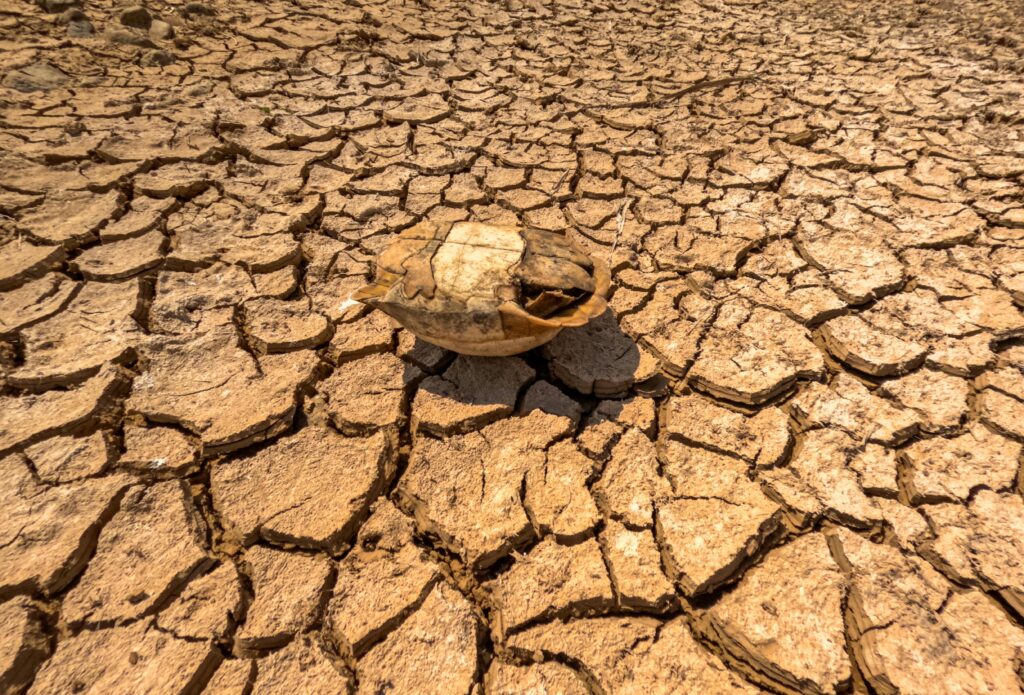
Photo: https://www.pexels.com/photo/drought-stricken-earth-with-tortoise-shell-36781407/


