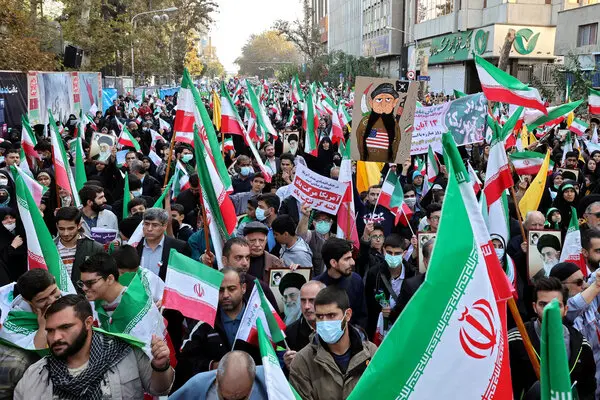
On February 28, 2026, Israel and USA launched coordinated airstrikes on Iran, referred to as part of the “2026 Iran War” or “Operation Epic Fury”, aimed at disrupting and dismantling Iran’s nuclear development program.But, the repercussions of the war were seen and faced by the entire world. Questions began to emerge: “Was the internal unrest in Iran during February viewed as an opportunity for this operation?” and “Will this war conclude through peace negotiations, or could it escalate into a broader allied conflict?”These questions can only be properly understood and answered by tracing and
understanding Iran’s long historical trajectory.
The Dominance of Russia and Britain (1809-1900)
During the Qajar dynasty, Iran maintained close ties with Britain and signed the
“Preliminary Treaty of Friendship and Alliance” in 1809. This agreement
ensured that Iran would not assist Napoleonic France in invading India. In
return, Britain agreed to give military support or financial aid if any European
power, such as Russia, attacked Iran.
Despite this Treaty, Britain did not actively help Iran during “The Battle of
Aslanduz (1812)”, fought between Russia and Iran. Later, however, Britain
acted as a mediator between Iran and Russia in the “Treaty of Gulistan (1813)”
and “Treaty of Turkmenchay(1828)”.
As a result, Iran lost vast portions of its Caucasian territories (modern-day
Azerbaijan, Dagestan, and Eastern Georgia)under the Treaty of Gulistan and
also lost Erivan (modern Armenia) and Nakhchivan under the Treaty of
Turkmenchay.Additionally, Iran was forced to pay a war indemnity of 20
million silver rubles to Russia.
Iran had fallen into a huge economic debt after the treaties, giving rise to an era
often described as “economic colonization through concessions.” Trade
privileges, including import and export duties, increasingly favored Russian
interests.
“The Reuter Concession (1872)” granted by Naser al-Din Shah to British
financier Baron Julius de Reuter, gave him sweeping control over nearly all of
Iran’s industrial and natural resources for 70 years. However, it collapsed within
a year due to domestic outrage and pressure from Russia. It has often been
labeled one of the most extreme transfers of a nation’s resources into foreign
hands.
During this period, the United States was not yet a global superpower. It was a
distant nation focused on its own Civil War and westward expansion. Because
of this, many Iranians actually viewed Americans with a great deal of trust and
hope, considering them a potential “third force” that could counterbalance
British and Russian dominance.
The Oil Conflict (1901-1941)
In 1901, William Knox D’Arcy, a wealthy London socialite, secured an oil
concession from Mozaffar al-Din Shah of Persia. Oil was discovered in
commercial quantities in 1908, but by then D’Arcy was nearly bankrupt and
transferred his rights to the Anglo-Persian Oil Company in 1909.
Just before World War I, Winston Churchill then head of the British Navy,
made a historic decision to convert the fleet from coal to oil. To secure a stable
fuel supply, the British government acquired a 51% controlling stake in the
company.
By the late 1920s, under Reza Shah, the Iranian government recognized that it
was receiving minimal financial benefit from its own oil. After canceling the
original D’Arcy concession in 1932, the dispute was brought before the League
of Nations, resulting in a renegotiated agreement in 1933. Despite slight
improvements in royalties, British control was extended for another 32 years.
During World War II, following Germany’s invasion of the Soviet Union in
June 1941, the UK and USSR needed to ensure a secure route for supplies and
protect the Abadan refinery from a potential German threat. And hence the
Anglo-Soviet Invasion of 1941 took place.
In September 1941, Reza Shah was forced to abdicate, and his 21-year-old son
was placed on the throne, effectively as a figurehead ruler.
The 1953 Coup
On 28 April 1951, the Shah appointed Mosaddegh as Prime Minister after
voting and approval by the Majlis (Iranian Parliament). He was a prominent
nationalist figure who led the drive to nationalize the Iranian oil industry.
The parliament (Majlis) voted to nationalize Iran’s oil industry and expel foreign
companies representatives from the country which led Britain to impose a
global boycott on Iranian oil. This created significant economic strain and
intensified tensions between Mosaddegh and the Shah.
Finally In August 1953, Mohammad Mosaddegh was overthrown in a coup
which was orchestrated by the United Kingdom and the United States to
safeguard British oil interests following nationalization in Iran after Mosaddegh
nationalized the country’s oil industry.
This was the moment the US transformed from a distant friend into an
“imperialist meddler.”
The Iranian Revolution (1979)
Following the 1953 coup, Mohammad Reza Pahlavi ruled Iran for over 25
years. During the 1960s, Ayatollah Ruhollah Khomeini emerged as a key
opposition figure, criticizing the Shah’s “White Revolution” and policies of
Westernization. He was exiled in 1964 and spent more than 14 years abroad in
Iraq, Turkey, and France.
On January 16, 1979, the Shah left Iran due to declining health caused by
lymphatic cancer. Two weeks later, Khomeini returned to Tehran in a chartered
Air France Boeing 747, greeted by millions of supporters.
In October 1979, the ailing Shah went to do medical treatment in the United
States. Many Iranians interpreted this as a repeat of 1953, fearing another
American-backed coup.
In response, a group of radical students stormed the U.S. Embassy in Tehran on
November 4, 1979, taking 52 Americans hostage for 444 days until January 20,
1981. The crisis ended with the signing of the Algiers Accords.
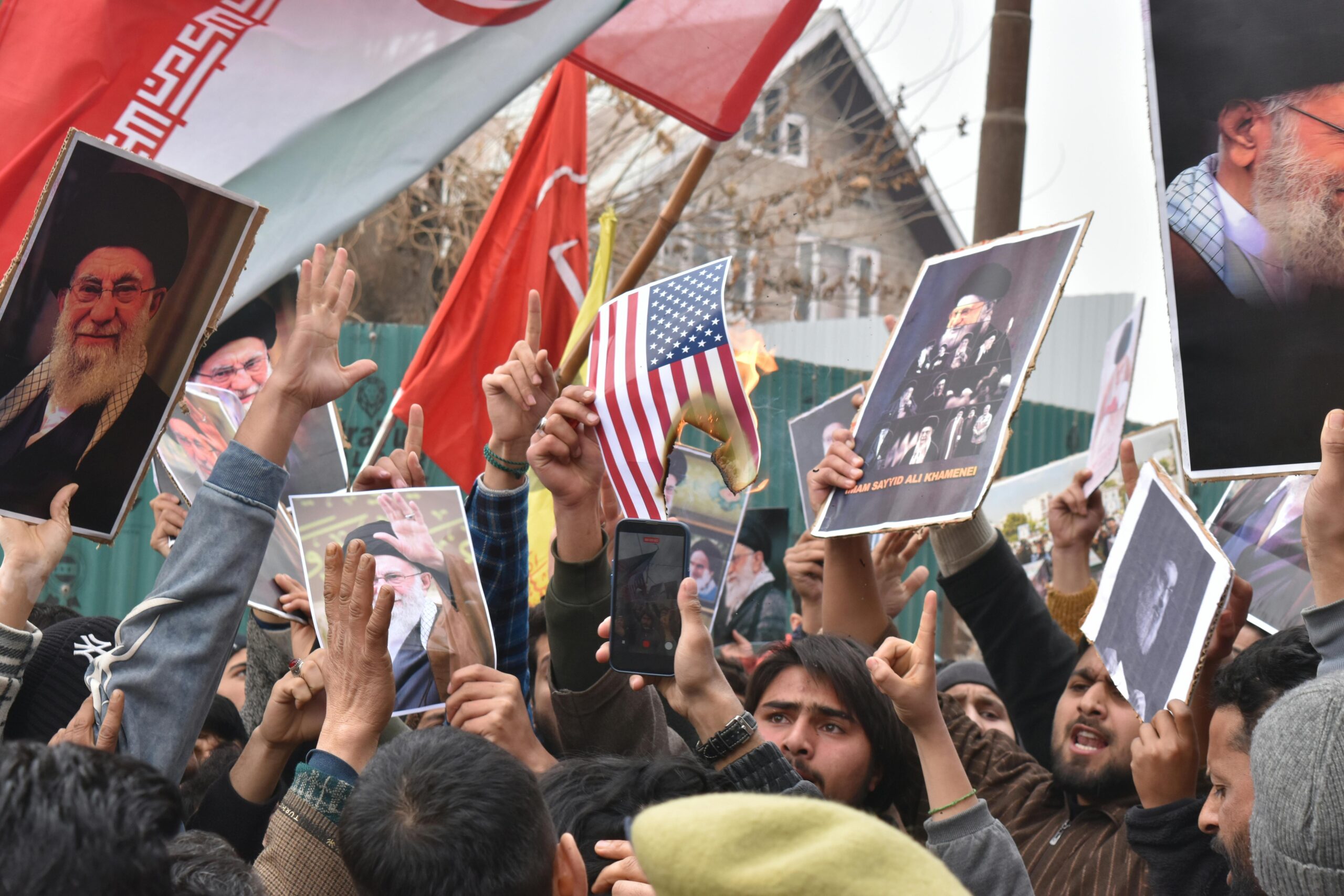
This moment solidified the transformation of U.S.–Iran relations from
cooperation to hostility, symbolized by rhetoric such as “Great Satan” and “Axis
of Evil.”
The Iran Iraq War (1980-1988)
Iraqi President Saddam Hussein invaded Iran to seize the Shatt al-Arab
waterway, protect his regime from Iranian revolutionary influence, and exploit
Iran’s perceived military vulnerability.
The United States viewed the conflict as an opportunity to counter the new
Iranian regime and provided Iraq with intelligence, economic support, and
dual-use technology.
The war caused immense devastation, resulting in approximately one million
deaths across both nations. It ended in August 1988 when both sides accepted a
UN-brokered ceasefire under Resolution 598.
U.S. involvement further strained relations with Iran and contributed to
long-term hostility
The Era of Sanctions
The first round of U.S. sanctions was imposed in November 1979 following the
hostage crisis. These were lifted in January 1981 but were imposed the second
time in 1987.
A third wave of sanctions was introduced in December 2006 under United
Nations Security Council Resolution 1737, after Iran failed to comply with
Resolution 1696, which required it to halt uranium enrichment.
The Joint Comprehensive Plan of Action (JCPOA ) finalized on July 14, 2015 under
the Obama administration limited Iran’s nuclear activities in exchange for
sanctions relief.
However, in 2018, the Trump administration unilaterally withdrew from the
nuclear deal and re-imposed sanctions , initiating a“maximum pressure
campaign” against Iran.
In December 2025, Treasury Secretary Scott Bessent described the collapse of
Iran’s currency as the “grand culmination” of this strategy.
The Current Scenario
On February 28, 2026, Israel and the United States launched coordinated strikes
on multiple sites within Iran. The operation was referred to as “Roaring Lion”
by Israel and “Operation Epic Fury” by the United States aimed at weakening
the Islamic regime.
The strikes reportedly included the assassination of Supreme Leader Ali
Khamenei, a nationwide internet shutdown lasting over 50 days, one of the
longest in history, and a blockade of the Strait of Hormuz.
Iran responded with missile and drone strikes against Israel, US bases, and
Arab countries in the Middle East.
High-level negotiations between the United States and Iran, mediated by
Pakistan, were held in Islamabad on April 11–12, 2026. Although a temporary
ceasefire was established, no permanent agreement was reached.
Iran reopened the Strait of Hormuz on April 18, allowing commercial shipping
under certain conditions, while warning that it may close the strait again if U.S.
restrictions on Iranian ports continue.
The recent ceasefire between Lebanon and Israel, which came into effect at
midnight on April 17, 2026, may create an opportunity for renewed dialogue
between Iran and the United States, potentially leading to a more lasting
resolution.
Photo: https://www.pexels.com/photo/protestors-with-flags-and-signs-in-demonstration-35710201/