The 79th Session of the World Health Assembly is currently underway in Geneva, Switzerland. Since last Monday, it has been the world’s largest annual meeting on global health, much like how every country holds parliamentary sessions every year.
For this meeting, officials and health ministers from nearly every country gather in Geneva. The reason this meeting is held in Geneva, you may ask, lies in the significance of the place because Switzerland has remained historically neutral in terms of global politics, which makes it an ideal place for other states to trust. It is also home to the highest concentration of international organisations in the world.
The assembly began with the election of Dr. Víctor Elías Atallah Lajam, the Health Minister of the Dominican Republic, as President of WHA79. The leadership role rotates between regions every year, and this time it went to the Americas.
He was supported by vice-presidents from Libya, Mali, Poland, Nepal, and Papua New Guinea.
Then, two major committees began discussing important issues. Committee A, chaired by Dr. Timur Sultangaziyev of Kazakhstan, leads on health policies and technical matters.
Committee B, led by Dr. Kwabena Mintah Akandoh of Ghana, is focusing on finances, administration, and legal issues.
Opening speeches were delivered by Swiss official Elisabeth Baume-Schneider and former Ghanaian President John Dramani Mahama. In a video message, António Guterres warned that wars, economic cuts, and climate change are threatening the global right to health.
Unlike previous assemblies that mainly focused on long-term planning after COVID-19, this
year’s meeting is dealing with active disease emergencies.
Ebola Outbreak in Africa
A new and highly dangerous strain of Ebola is spreading in parts of Africa. The outbreak has
been declared a Public Health Emergency of International Concern (PHEIC), which is the
WHO’s highest alert level for global health threats.
Health officials are especially worried because there is currently no approved vaccine or
proven treatment for this strain. Countries are now urgently discussing emergency funding
for disease monitoring, faster testing and research, local containment efforts, and
emergency medical support.
The situation has revived fears similar to the deadly West African Ebola crisis from the past
decade.
Rising Hantavirus Cases
At the same time, several countries are reporting deadly outbreaks of Hantavirus, a disease
usually spread by rodents. Experts say climate and environmental changes are affecting
rodent habitats, increasing the risk of infections spreading to humans.
These outbreaks have exposed weaknesses in disease monitoring systems and shown that
global preparedness is struggling to keep up with rapidly changing health threats.
WHO Facing a Financial Crisis
The WHO is also dealing with serious financial problems. Budget cuts, falling international
donations, and staff reductions are affecting many of its health programs.
There is additional concern over possible reductions in support from major member
countries such as the United States and Argentina. If these countries reduce funding or
participation, the WHO could face major gaps in its 2026–2027 budget.
WHO Director-General Tedros Adhanom Ghebreyesus warned delegates that health
security cannot be handled by countries individually. He stressed that diseases cross
borders quickly, meaning global cooperation remains essential.
Political Conflicts Slowing Health Decisions
Political disagreements between countries are also affecting discussions inside the
assembly.
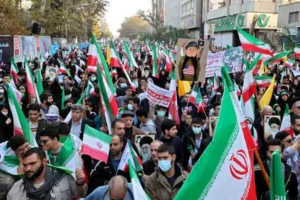
Debates over conflicts in Gaza, Ukraine, and Iran have divided member states. Some
countries want resolutions condemning attacks on hospitals and healthcare workers, while
others argue that political disputes should not dominate a health forum.
Civil society groups such as the People’s Health Movement warned that political fighting is
distracting attention from urgent healthcare needs on the ground, where medical workers
continue to face violence, shortages, and misinformation.
Climate Change Becoming a Major Health Issue
Climate change is now one of the WHO’s top priorities. Delegates are continuing discussions
from last year’s climate and health action plan.
Health experts say climate change is increasing air pollution, heat-related illnesses, mental
health problems, infectious diseases, and antibiotic-resistant infections.
Environmental groups are urging governments to move faster in reducing dependence on
fossil fuels. These discussions are also being seen as preparation for the upcoming COP31
climate summit, which will be hosted by Australia and Türkiye.
Greater Focus on Traditional Medicine
Another major topic is the role of traditional medicine in healthcare systems.
Many low and middle-income countries are facing shortages of doctors, hospitals, and
funding. As a result, WHO members are discussing how traditional and indigenous medical
practices can safely support primary healthcare.
The WHO wants countries to create proper safety rules, scientifically test herbal treatments,
and integrate proven traditional methods into healthcare systems.
Supporters believe this could improve access to healthcare, especially in poorer regions.
Honouring Global Health Leaders
During the assembly, the WHO also presented its Director-General’s Awards for Global
Health to recognize major contributions to public health. The 2026 award winners include:
- . Tore Godal for work on vaccines and tropical diseases.
. Merceline Dahl-Regis for helping eliminate measles and rubella in the Americas. - . Mike Ryan for leading responses to crises such as Ebola and COVID-19.
. Heba El Sewedy for healthcare work in conflict-affected regions.
The 79th World Health Assembly is more than a routine international meeting. It is a major
test of whether countries can still work together during a time of disease outbreaks, political
conflict, climate threats, and economic pressure.
The decisions made in Geneva this week could shape how the world responds to future
pandemics, climate-related illnesses, and healthcare inequality for years to come. If
countries fail to cooperate, experts fear the global health system could become weaker and
more fragmented, leaving nations to face future crises largely on their own.